
Autumn in Kashmir, locally called Harud, runs from late September to mid-November. October is the peak month — Chinar trees turn deep crimson and gold, saffron fields bloom purple in Pampore, apple orchards are at their fullest, and daytime temperatures sit comfortably between 15°C and 25°C in Srinagar. Best places to visit include Srinagar’s Mughal Gardens and Dal Lake, Pahalgam, Gulmarg, Pampore, Sonamarg, and Doodhpathri. Autumn is the least crowded, most affordable, and arguably most beautiful time to visit the Kashmir valley.
There is a moment — usually somewhere around mid-October — when you are standing on the banks of Dal Lake and you realise you are looking at something a photograph cannot quite capture. The Chinar trees are burning in red and gold. The water mirrors everything. The air carries the faint sweetness of saffron from the fields nearby. And the entire valley feels quieter than it has any right to be.
That is autumn in Kashmir. Locally called Harud, it is the season we consider our best-kept secret — the one most tourists haven’t discovered the way they’ve discovered summer or the snow. We’ve spent over 20 years organising travel across this valley and watching it change with the seasons. Autumn is genuinely the most beautiful of all four.
This guide covers everything you need to plan your autumn visit — the weather, the best places, what makes this season special, and the honest practical details most travel blogs skip.
What Is Harud — Autumn in Kashmir?
Harud is the Kashmiri word for autumn, and it covers the period from late September through mid to late November. It is one of the four seasons the valley experiences distinctly:
- Sonth — Spring (March to May)
- Grishm — Summer (June to August)
- Harud — Autumn (September to November)
- Wandh — Winter (December to February)
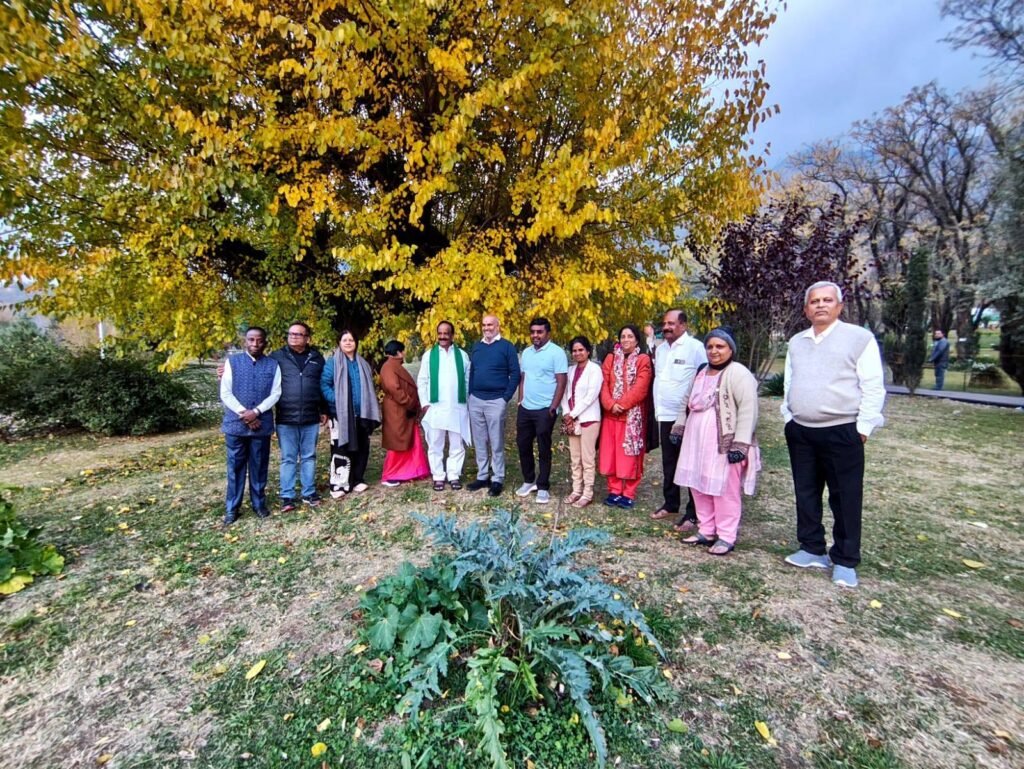
Harud isn’t just a change in temperature — it’s a transformation. The valley shifts from the greens of summer into something richer and warmer. The rice paddy fields turn gold as harvest begins. The apple orchards are heavy with fruit. And the Chinar trees, some of them hundreds of years old, start their slow burn from green to amber to deep crimson.

The season moves in stages:
Late September — The shift begins. Mornings get crisp. The first Chinar leaves show amber at their edges. Rice harvest starts across the paddy fields.
October — Peak Harud. Chinar trees across Srinagar, Pahalgam, and Gulmarg are in full colour by mid-month. Saffron fields in Pampore bloom purple. Apple picking is in full swing. This is the month to come.
Early November — Atmospheric and quiet. Leaves fully turned, many fallen, a thin mist sitting on Dal Lake in the mornings. First snowfall visible on the peaks above Gulmarg. Fewer tourists than October.
Late November — Winter approaches. Nights get cold. The valley begins its slower, quieter phase ahead of December snow.
Weather in Kashmir During Autumn
This is the question we get most before autumn bookings, so let’s be direct about it.
In Srinagar city, daytime temperatures during October sit between 15°C and 25°C — comfortable in a light jacket during the day, with a proper warm layer needed after sunset. Nights drop to around 7°C to 10°C by late October.
Gulmarg sits at 2,650 metres — roughly 8 to 10 degrees cooler than Srinagar at all times. October days in Gulmarg run between 5°C and 12°C, with nights close to freezing. Warm layers are not optional here.
Pahalgam at around 2,130 metres tracks between Srinagar and Gulmarg — pleasant in October but cold in the evenings. A good warm jacket and thermals for night are the sensible choice.
Sonamarg can see early snowfall at the higher passes from mid-October onward, though the main valley and road typically stay accessible through most of the month.
The practical rule we give every client: pack as though you’re heading somewhere 10 degrees cooler than you expect, and you’ll be comfortable throughout.
Why Autumn Is the Best Season to Visit Kashmir
We’ve answered this question across thousands of enquiries. Summer gets the crowds. Winter gets the ski enthusiasts. Spring gets the tulip season visitors. But anyone who’s been to Kashmir more than once — locals, regular travellers, photographers — will say autumn without hesitation.
The light is extraordinary. Autumn light in Kashmir has a warmth that doesn’t exist at any other time of year. The sun sits lower, the shadows are longer, and the entire valley looks like it’s been lit from within. Photographers who’ve shot Kashmir across every season consistently choose October as the most rewarding month.
Far fewer tourists. Autumn is shoulder season, which means you visit popular places like Dal Lake, Betaab Valley, or Sonamarg at a relaxed pace — without queues, without overpriced hotels, without the noise of peak summer. Houseboats that were fully booked in July have real availability in October, often at lower rates.
You see Kashmir living, not just performing for tourists. The apple harvest, the saffron bloom, the walnut gathering — these are real things happening in real time during Harud. Driving through the countryside in October means passing farmers working saffron fields and orchards heavy with fruit. Most summer tourists never see this side of the valley.
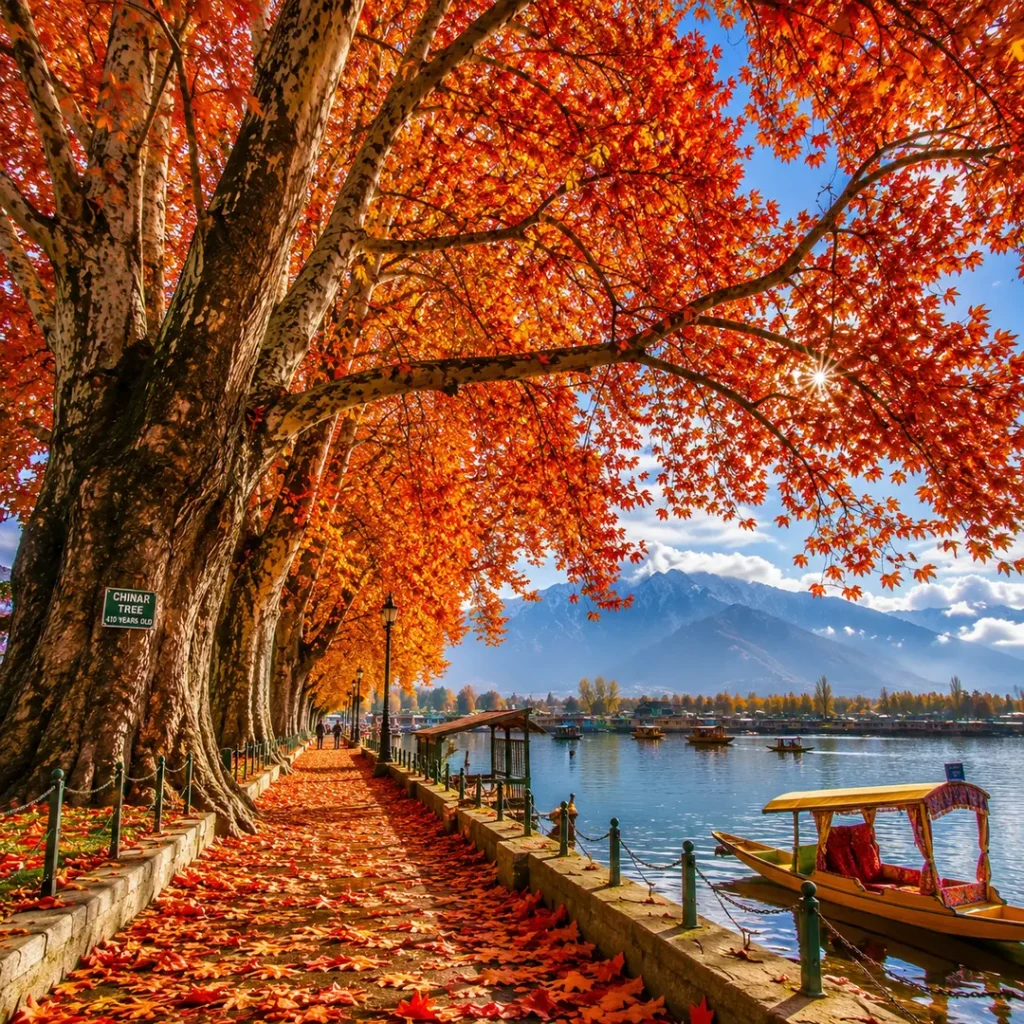
The Chinars. There is genuinely nothing else like them in Indian travel. These trees — planted during the Mughal period, some centuries old — turn a shade of deep crimson and gold in October that has to be seen to be believed. They line the Mughal gardens, the shores of Dal Lake, and the roads into Pahalgam. In autumn, they are reason enough to come.
Highlights of Kashmir in Autumn Season
The Chinar Trees
Kashmir’s version of fall foliage centres entirely on the Chinar, and it rivals anything you’d find in Japan or New England — with the added backdrop of Himalayan peaks and a Mughal garden in the foreground.
The best places to see Chinars in peak autumn colour?
Naseem Bagh, Srinagar
Over 600 Chinar trees inside the Kashmir University campus. Free to visit, spectacular in October. Most tourists don’t know it exists.
Shalimar Bagh and Nishat Bagh
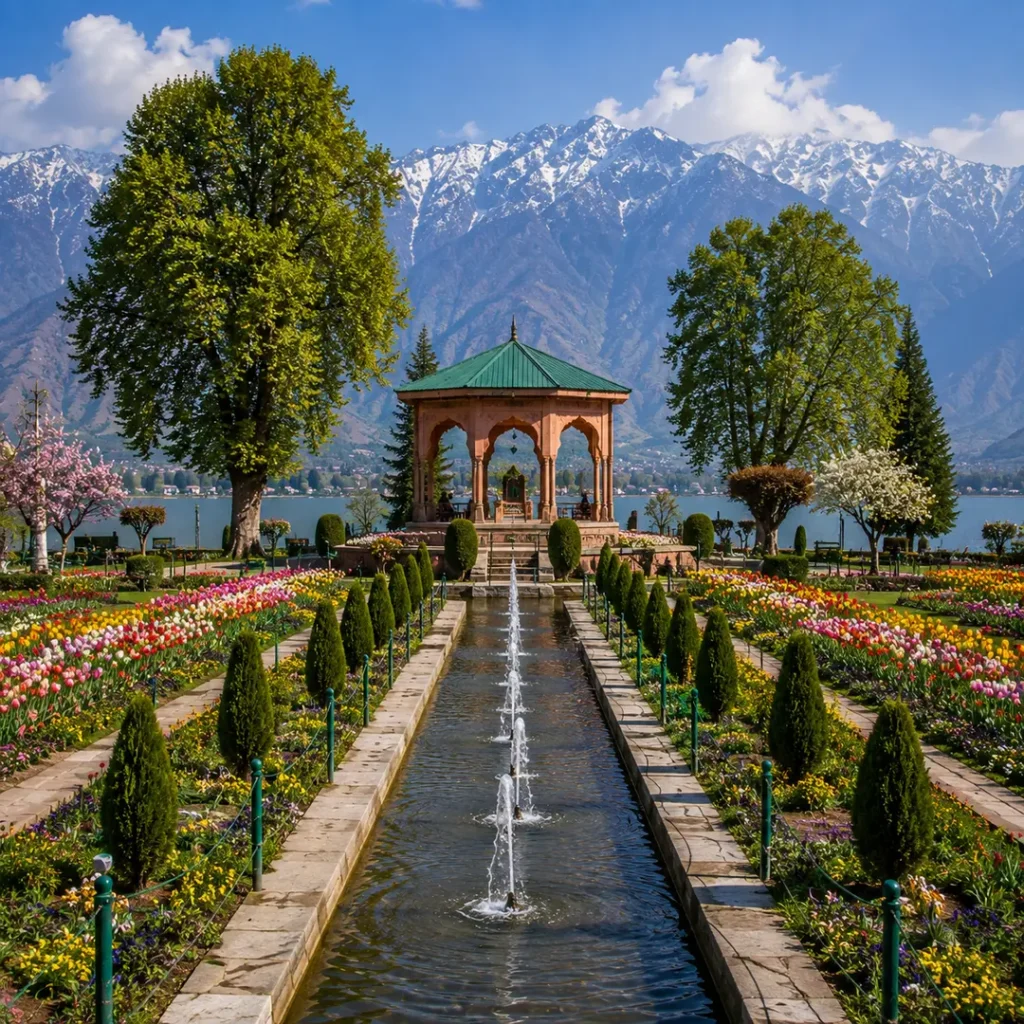
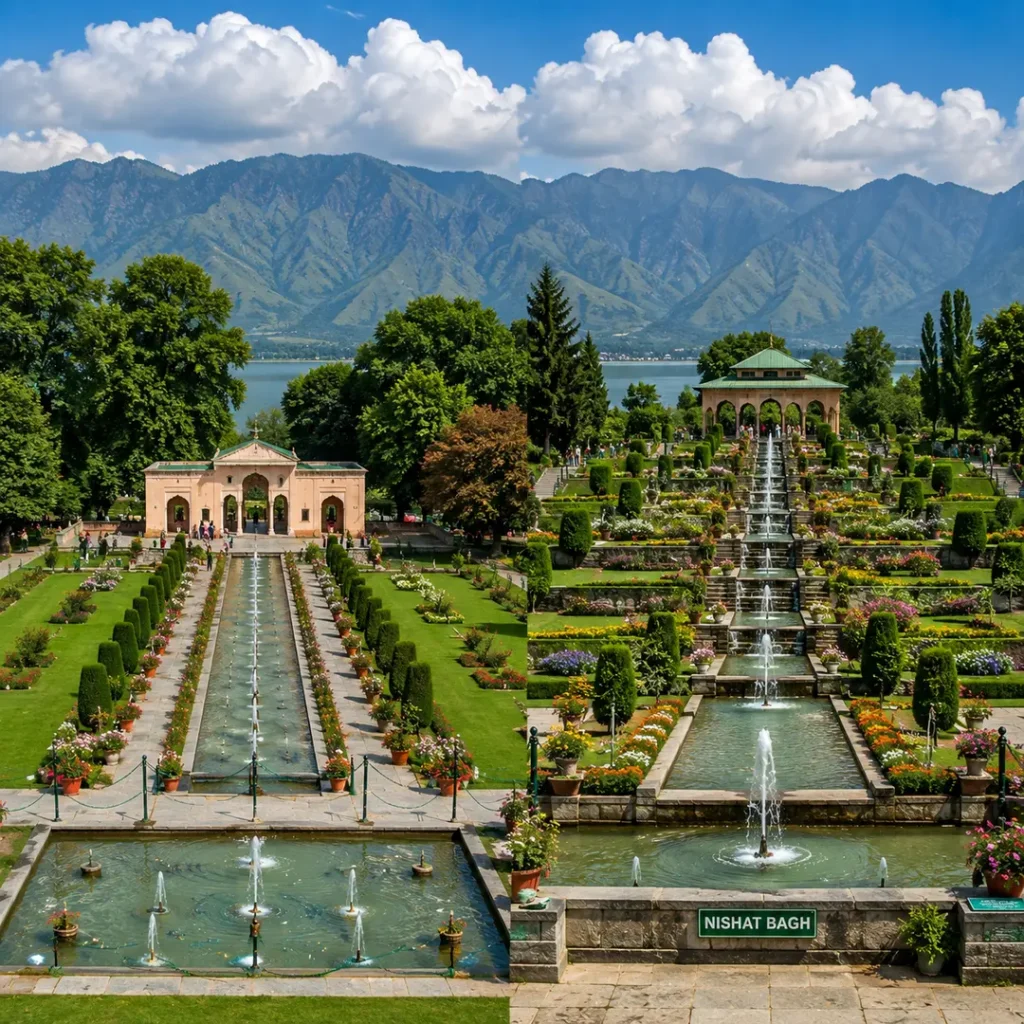
The Mughal gardens are built around Chinar trees. In autumn, the formal terraced garden structure combined with the burning leaves creates images you won’t forget.
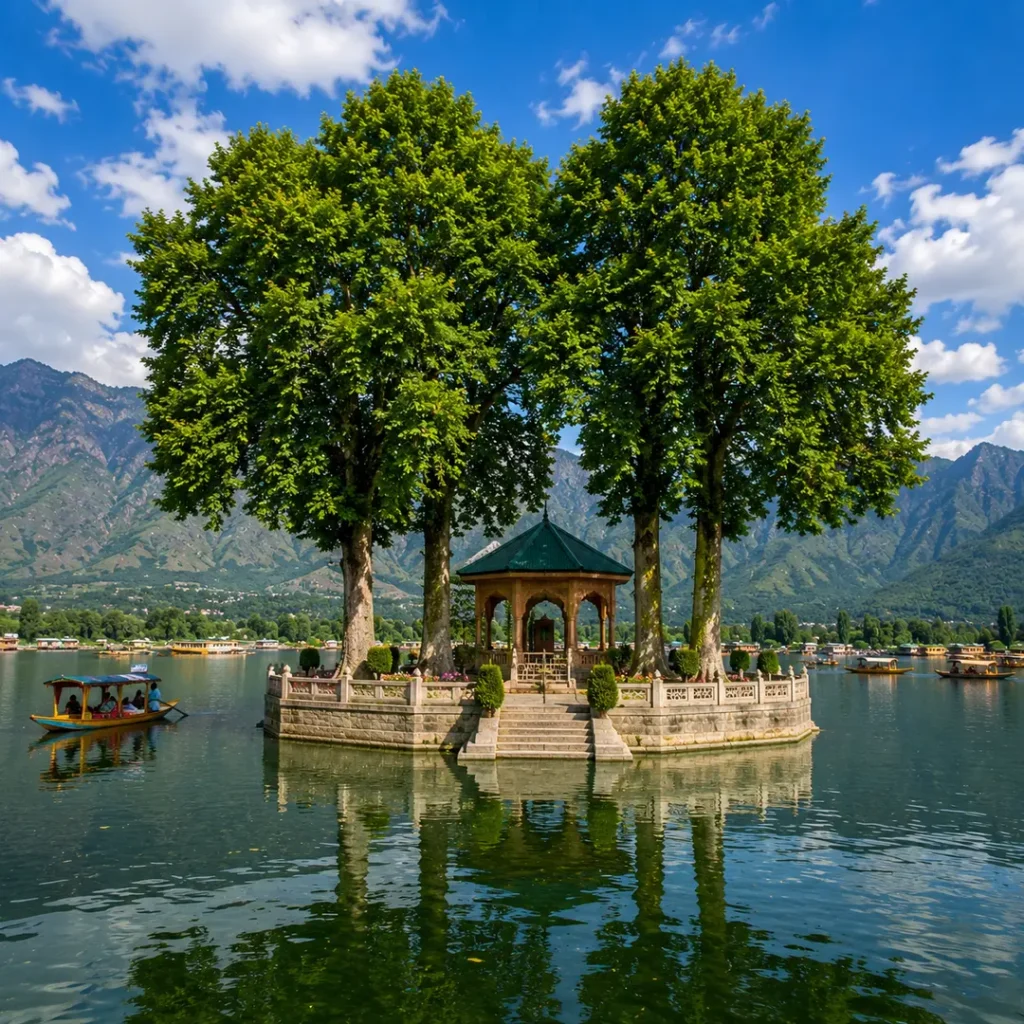
Char Chinar, Dal Lake
A small island in the middle of the Dal, named for its four ancient Chinars. Access by shikara ride, 10 to 15 minutes from the shore. Worth doing at golden hour.
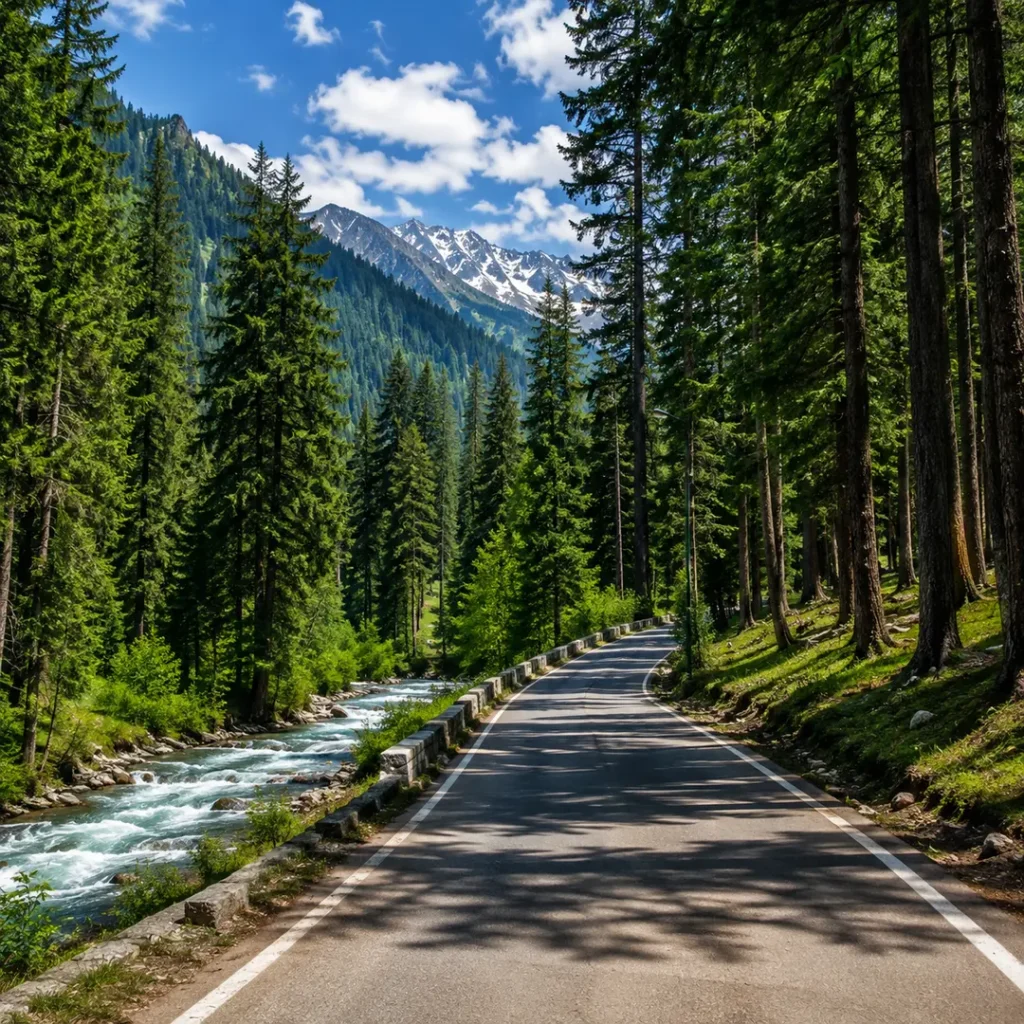
Pahalgam’s forest roads
The drive into Pahalgam in October takes you along the Lidder River, with willows and Chinars on both sides turning gold-orange above the clear water.
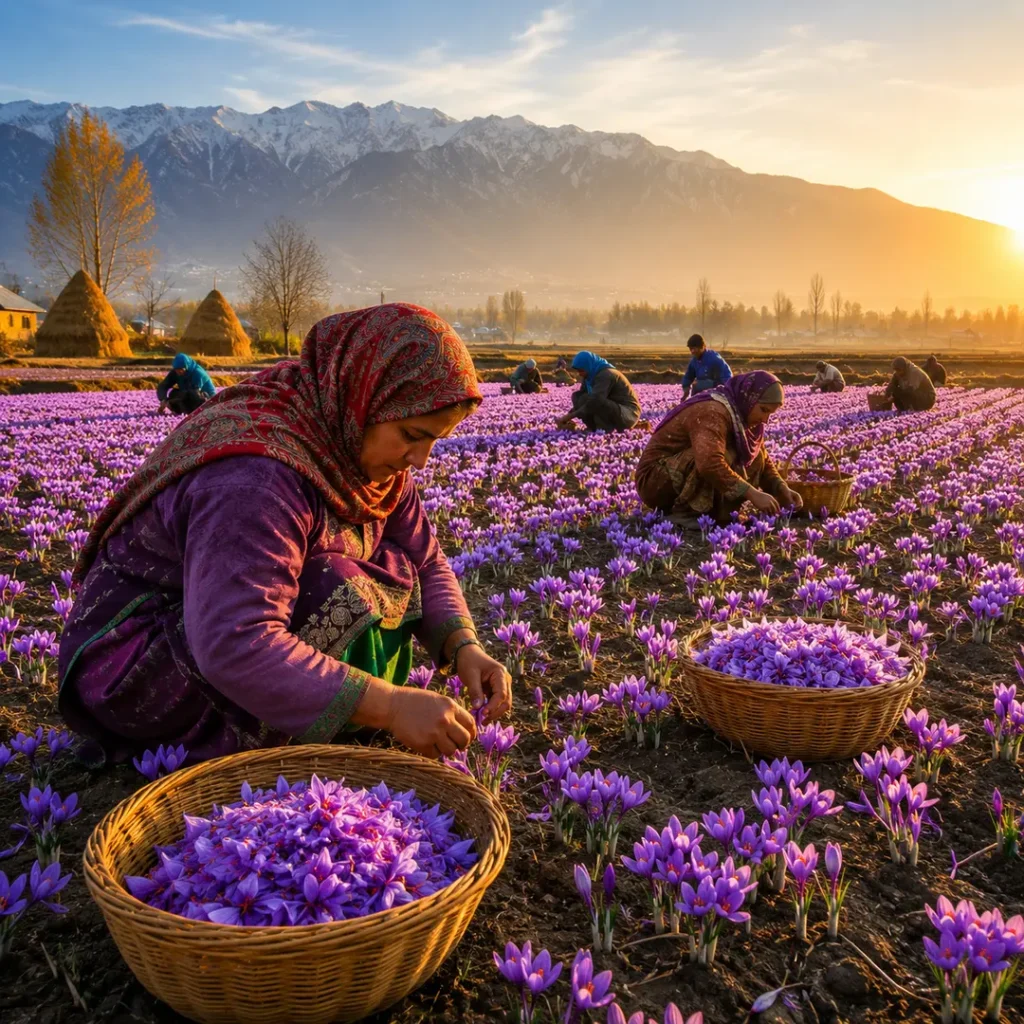
The Saffron Harvest at Pampore
This is the autumn highlight most visitors don’t know about, and it genuinely changes how people understand Kashmir.
Pampore is 14 km south of Srinagar — 25 minutes by road. Every October, the fields here turn purple with saffron flowers (Crocus sativus) for a brief, beautiful window. The air carries a faint sweetness that is difficult to describe to anyone who hasn’t smelled it. Walking through those fields in the morning light is a genuinely rare experience — the kind that people bring up when they talk about their Kashmir trip years later.
The saffron harvesting process involves picking each flower by hand at dawn, before the sun opens the petals too wide. It is precise, delicate work, and mostly done by the women of farming families. Over 30,000 families in the Pampore region depend on the saffron harvest for their livelihood.
You can walk through the fields, watch the harvest, and buy fresh saffron directly from farmers. The quality is exceptional and the price is far better than any shop or market. An hour here is worth more than any souvenir.
The peak bloom is typically from mid-October to early November, though the exact timing varies year to year with the weather.
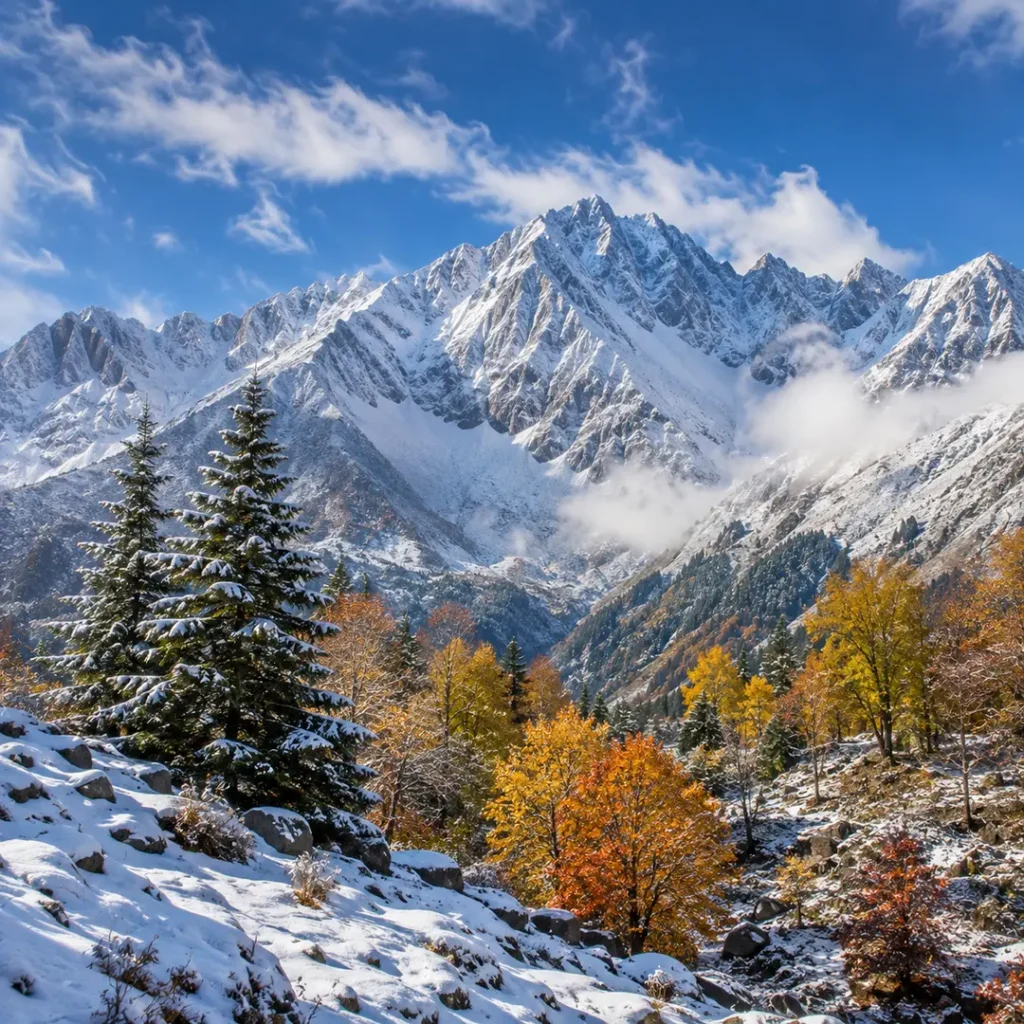
First Snow on the High Peaks
By mid-October, the high ridgelines above Gulmarg begin showing their first proper snowcap. You can see these clearly from Srinagar on a clear day — white peaks behind the valley’s golden trees. The visual contrast of new snow and autumn colour is something the valley offers for only a few weeks each year, and it is unforgettable.
Best Places to Visit in Kashmir in Autumn
Srinagar
The city deserves more time in autumn than most itineraries give it. The Mughal Gardens are the obvious draw, but don’t miss Naseem Bagh, Char Chinar, and the floating vegetable market on the Dal in the early morning. A shikara ride at sunset in October — with Chinar reflections on the still water — is one of the most genuinely beautiful things you can experience in the subcontinent.
Lal Chowk and the old city also feel different in autumn: less crowded, more local, with kangri sellers starting to appear on street corners.
Pahalgam
Pahalgam in October is a different place from Pahalgam in July. The Lidder River still runs clear and cold, but the forests on either side have turned gold and orange. Betaab Valley, Aru Valley, and Chandanwari are all accessible and worth visiting. The town itself is quieter, hotels are more available, and the whole place feels like it’s been restored to itself after a summer of visitors.
Gulmarg
Gulmarg is worth visiting in October specifically because of what’s happening there: the meadows are turning gold, the Gondola is usually running, and the first light snow may have dusted the upper station. The crowd-to-landscape ratio is far better than summer. Carry warm layers — above the second Gondola station, temperatures can be close to freezing even during the day in late October.
Pampore
The saffron town, 14 km from Srinagar. Half a day is enough — morning for the fields, afternoon back in the city. Don’t miss this. Most people who visit Pampore in October say it was the most memorable part of their Kashmir trip.
Sonamarg
Weather-dependent in October, but accessible through most of the month. The high passes see early snow, but the valley itself and the main meadow stay beautiful and reachable. The contrast of first snow on the high ground with autumn colour in the valley below is worth planning for.
Doodhpathri
An hour west of Srinagar, barely on the tourist radar, and magnificent in autumn. The meadows here turn gold and rust in October without any of the crowds that Pahalgam and Gulmarg attract. If you want autumn in Kashmir without sharing it with tour buses, this is where to go.
Autumn in Kashmir for Honeymoon Couples
Kashmir in October is genuinely one of the most romantic settings in India. The houseboat experience on Dal Lake in autumn — mist on the water in the morning, Chinar leaves falling slowly outside your window, a cup of Kahwa in your hand — is something that people describe as the kind of trip they measured other trips against afterward.
A shikara ride on Dal Lake at sunset, when the golden Chinar reflections double on the still water.
The saffron fields at Pampore in the morning — purple, quiet, unlike anything else in India.
An evening in Pahalgam by the Lidder River when the leaves have turned and the water is perfectly clear.
First snow at Gulmarg if the timing allows — there’s something about the quiet of a Gulmarg November that feels made for two people.
How Much Does a Kashmir Trip Cost in Autumn?
Autumn is one of the most cost-effective times to visit Kashmir. Hotels and houseboats that carry premium rates in June and July have better availability in October and often at lower prices. Transport costs run similarly year-round.
For an honest, itemised quote based on your specific dates, group size, and budget, browse our Kashmir tour packages or reach out directly — we’ll give you a real number with nothing hidden in it.
If you need transport sorted separately, our car rental service covers airport pickups, Srinagar sightseeing, and outstation trips to Pahalgam, Gulmarg, Sonamarg, Pampore, and Doodhpathri.
Is It Safe to Visit Kashmir in Autumn?
Yes. This is one of the questions we receive most, and the honest answer is that Kashmir has become significantly safer and more accessible for tourists over the past several years. Autumn is one of the calmer, more peaceful periods for travel in the valley — the season sees none of the weather disruptions (flash floods, road closures) that can occasionally affect the summer monsoon period.
We have operated in Srinagar for over 20 years and manage travellers from across India and internationally through autumn every year without incident. The valley’s tourism infrastructure — hotels, transport, guides, medical facilities — is solid and well-maintained. Most people who visit Kashmir in autumn come back. That says more than any safety assurance can.
Frequently Asked Questions
What are the 4 seasons of Kashmir?
Which months are autumn in Kashmir?
Which 3 months are autumn?
What are the best places to visit in Kashmir in autumn?
How much will a Kashmir trip cost?
Is it safe to visit Kashmir now?
In which month does snowfall occur in Kashmir?
Is October a good time to visit Kashmir?
Does it snow in Kashmir in October?
Can I visit Gulmarg in October?
How much does a Kashmir trip cost in October?
Can honeymoon couples visit Kashmir in October?
What Our Travellers Say
Hover to pause · Auto-slides every 4 seconds